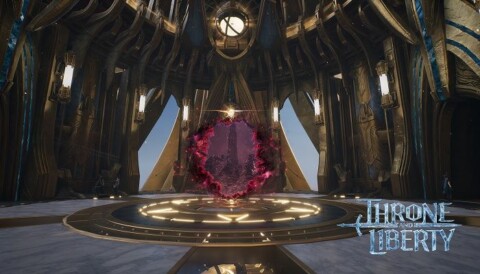
The relationship between game development and Bitcoin casinos has always been one of mutual influence. But in recent years that relationship has deepened and accelerated in ways that are reshaping both industries simultaneously. The techniques, technologies and design philosophies that the gaming industry has developed over decades are flowing into BTC casino products with increasing speed — and the results are visible in every dimension of the player experience, from how games look and feel to how platforms retain players and how developers think about their audience.
From Slot Machines to Game Engines
The earliest Bitcoin casino games were, by the standards of the broader gaming industry, primitive. Simple slot mechanics, basic card game logic and rudimentary graphics were the norm — understandably so, given that the technical priorities of the first BTC casino operators were in payment infrastructure and security rather than game production values.
That era is over. Modern BTC casino games are built on the same engines, with the same production pipelines and by teams with the same skillsets as the broader video game industry. Unity and Unreal Engine, the dominant platforms for game development across console, PC and mobile, are now used to produce casino game content. The visual quality, animation sophistication and audio design of leading BTC casino titles reflect this — they are products of game development culture, not adapted gambling software.
The practical consequence is dramatic. A BTC casino game built on a modern engine by a team with game development backgrounds looks and feels fundamentally different from one built by a team whose primary expertise was in gambling software. The gap in player experience between these two categories is significant enough to influence acquisition and retention in measurable ways.
Narrative Design and the Story-Driven Slot
One of the most consequential imports from mainstream game development into BTC casino content has been narrative design — the craft of building coherent, engaging stories around game mechanics.
Traditional slot games had themes rather than narratives. An Egyptian theme meant pyramids, pharaohs and hieroglyphs applied to the visual design of the reels. A mythology theme meant gods and monsters. The theme was decoration; the mechanics were unchanged underneath.
Modern BTC casino slots, developed by teams with game design rather than pure gambling backgrounds, treat narrative as a structural element rather than a cosmetic one. Story progression unlocks new game features. Character development across a session creates investment in outcomes beyond the individual spin. Lore delivered through cutscenes and environmental storytelling gives players a reason to engage with the game as a world rather than simply as a mechanism for potential winnings.
This narrative approach borrows directly from role-playing games and story-driven video games where player investment is built through accumulated context and emotional engagement. The skill of creating that investment — of making players care about what happens next — is a game development discipline that has transformed the ceiling of what a BTC casino slot can be.
Progression Systems: The RPG Influence
Role-playing games solved the player retention problem decades ago. The answer they found — persistent character progression that rewards continued play with meaningful advancement — has become one of the most widely replicated mechanics in all of digital entertainment. From mobile games to social platforms to fitness applications, the RPG progression loop has proven extraordinarily effective at sustaining long-term engagement.
BTC casino platforms have imported this thinking with considerable sophistication. Player accounts now accumulate experience through gameplay, unlocking new game features, higher stake options, exclusive content and status markers that signal achievement within the player community. Skill trees that allow players to customise their experience, seasonal progression systems that provide time-limited goals and achievement frameworks that reward exploration of the full game library all reflect direct borrowing from RPG design philosophy.
The effect on player behaviour is measurable. A player with significant progression investment in a platform has a concrete reason to return that goes beyond the product quality of any individual session. The accumulated progress is itself a retention mechanism — and that mechanism was designed and refined in the RPG genre before BTC casino operators recognised its applicability to their context.
Multiplayer Mechanics and Social Gaming
Single-player gaming dominated the early decades of video game history. The shift toward multiplayer — toward games that are fundamentally about playing with and against other people — has been one of the defining trends of the modern gaming era, and it has profoundly influenced how BTC casino platforms think about their product.
Live poker and multiplayer table games have always had a social dimension, but the multiplayer mechanics imported from modern game development go considerably further. Competitive leaderboards that update in real time and rank players against each other across game categories. Tournament structures with elimination brackets, group stages and finals events that create sustained competitive narratives over days or weeks. Guilds or clubs that allow players to form communities within the platform, share strategies and compete collectively against other groups.
These mechanics come directly from massively multiplayer online games and competitive gaming culture. The game developers who design them understand not just the mechanics themselves but the psychological dynamics of competition, community and status that make them engaging. BTC casino platforms that have brought this expertise in-house have built social layers around their core gaming products that fundamentally change the nature of player engagement.
Procedural Generation and Infinite Content
One of the most technically sophisticated contributions of game development to BTC casino content is procedural generation — the use of algorithms to create game content dynamically rather than through manual design.
In mainstream game development, procedural generation solves the content problem: how do you provide players with enough variety to sustain long-term engagement without the prohibitive cost of manually designing every element of the experience? Procedurally generated worlds, dungeons, missions and items can vary infinitely while maintaining coherent design principles.
Applied to BTC casino games, procedural generation enables slot mechanics that feel genuinely variable rather than cycling through a fixed set of outcomes. Bonus rounds that generate unique configurations each time they trigger. Visual environments that shift and evolve in ways that make repeated play feel fresh rather than repetitive. The underlying mathematics of the game remains controlled and compliant, but the surface experience of each session is shaped by generative systems rather than predetermined sequences.
This is a technically demanding capability that requires genuine game development expertise — knowledge of generative algorithms, procedural art systems and the design principles that make algorithmically created content feel intentional rather than random. BTC casino platforms that have built or licensed this capability are delivering player experiences that were simply not possible with earlier approaches to game production.
Esports Mechanics and Competitive Infrastructure
The esports industry has developed a sophisticated infrastructure for competitive gaming — tournament organisation, spectator experiences, commentary and broadcast production, ranking systems and prize structures — that BTC casino platforms are increasingly drawing on.
Poker has always had a competitive dimension, but the esports influence extends well beyond poker to game categories that have not traditionally had competitive formats. Slot tournaments where players compete to achieve the highest multiplier within a fixed time window. Skill-based game competitions where performance depends on player decisions rather than pure chance. Prediction markets and fantasy sports overlays that bring strategic depth to sports betting products.
The design of these competitive formats draws directly on esports experience — the understanding of what makes a competition feel meaningful, how to structure elimination formats that maintain tension throughout, how to create spectator experiences that are engaging even for players who are not competing, and how to build prize structures that attract and retain competitive players. These are skills developed in the esports context that BTC casino operators are importing as they build competitive layers around their products.
Mobile Game Design Principles
The mobile gaming industry has spent years solving a specific and commercially critical design problem: how do you create engaging game experiences for players who play in short sessions, on small screens, with frequent interruptions and in contexts where sustained attention is difficult?
The solutions that mobile game designers developed — streamlined core loops, one-handed play optimisation, session checkpoints that allow players to stop and resume without losing progress, notification systems that bring players back at the right moment and onboarding sequences that get players to their first meaningful experience as quickly as possible — are exactly the design principles that BTC casino mobile products need.
The migration of mobile game design expertise into BTC casino product development has produced mobile casino experiences that feel native to the mobile context rather than adapted from desktop products. Interfaces built around thumb reach zones. Loading strategies that prioritise getting players into gameplay quickly. Notification timing calibrated to player behaviour patterns rather than arbitrary schedules. Session design that acknowledges the reality of mobile play contexts.
Sound Design and Audio Engineering
Game audio has developed into a sophisticated discipline over the decades, with dedicated audio engineers, composers and sound designers working on how the sonic experience of a game shapes player emotion, attention and engagement in ways that visual elements alone cannot achieve.
The audio design of leading BTC casino games now reflects this sophistication. Adaptive soundtracks that shift dynamically in response to game state — building tension as a bonus round approaches, releasing it with a distinctive audio signature when a significant win lands. Sound effect design that makes individual game events feel weighted and satisfying rather than arbitrary. Spatial audio that creates a sense of environment and depth in ways that standard stereo sound cannot.
These capabilities require audio professionals trained in game audio rather than conventional music production or broadcast sound. The BTC casino platforms that have invested in genuine game audio expertise have products that sound categorically different from those that treat audio as an afterthought — and the difference in player experience, while difficult to quantify, is real and commercially significant.
AI and Adaptive Difficulty
Modern games use artificial intelligence extensively to calibrate the player experience — adjusting difficulty in real time based on player performance, personalising content presentation based on observed preferences and identifying the optimal moment to introduce new mechanics that sustain engagement without overwhelming the player.
BTC casino platforms are beginning to apply analogous AI systems to their products, drawing on game AI expertise to create experiences that adapt to individual players rather than presenting the same interface and content to everyone. Recommendation systems informed by detailed behavioural analysis. Dynamic bonus offers calibrated to individual player patterns. Engagement interventions triggered by AI systems that identify the right moment to surface a relevant promotion or introduce a new game.
The game AI techniques underlying these systems — reinforcement learning approaches, player modelling methodologies and the broader discipline of adaptive game design — are being adapted for casino contexts by teams that bring genuine game development expertise to the challenge.
The Cross-Pollination Continues
The flow of game development influence into BTC casino products shows no sign of slowing. As the technical barriers between game development and casino development continue to fall — as the same engines, the same tools and increasingly the same talent pools serve both industries — the rate of cross-pollination will only accelerate.
The BTC casino products of the next decade will be shaped by game development disciplines that are still evolving: virtual reality game design, haptic feedback systems, cloud gaming infrastructure and AI-generated content that creates genuinely unique experiences for each player. Each of these will find its way into BTC casino products, shaped by the commercial pressure of an industry that cannot afford to let the player experience stagnate.
Game development has always been about solving the problem of engagement — of creating experiences that players want to return to, that reward continued investment and that feel worth the time and attention they demand. That problem is identical in the BTC casino context, and the solutions the game development industry has spent decades refining are exactly what BTC casino operators need.
The collaboration between these two industries is one of the more productive creative and technical partnerships of the current era in digital entertainment. Its results are visible every time a player opens a BTC casino and finds something that feels less like a gambling product and more like a game worth playing.