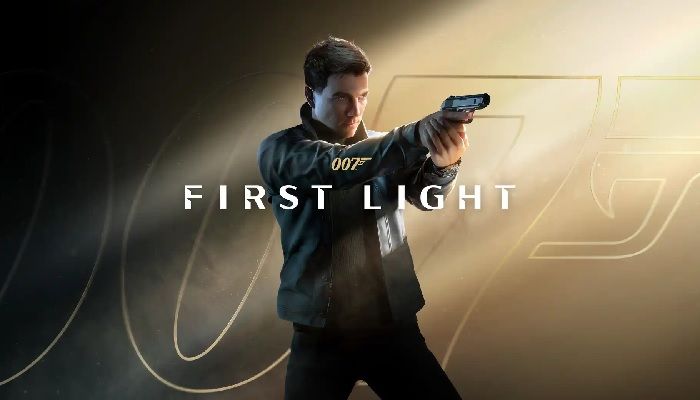
It’s difficult to neatly summarize how I feel about 007 First Light, IO Interactive’s bold reinterpretation of the James Bond universe. Serving as an origin story for the legendary MI6 agent, the game constantly shifts between extremes: it feels both compelling and predictably structured, exhilarating yet occasionally frustrating, cinematic in pacing while also, at times, overstaying its welcome. And yet, despite all its contradictions, it may still stand as one of the strongest Bond games ever made.
Reporting For Duty
007 First Light rewinds the clock to the earliest chapter of Bond’s career, charting his attempt to enter the newly revived 00 program. After a dramatic helicopter crash on the black sands of Iceland, Bond finds himself drawn into MI6’s orbit, kicking off a structured but engaging introduction that doubles as both tutorial and narrative foundation. These early sequences also introduce a cast of trainees who shape his formative years, including the sharp-witted Cressida and the rugged yet endearing Monroe.
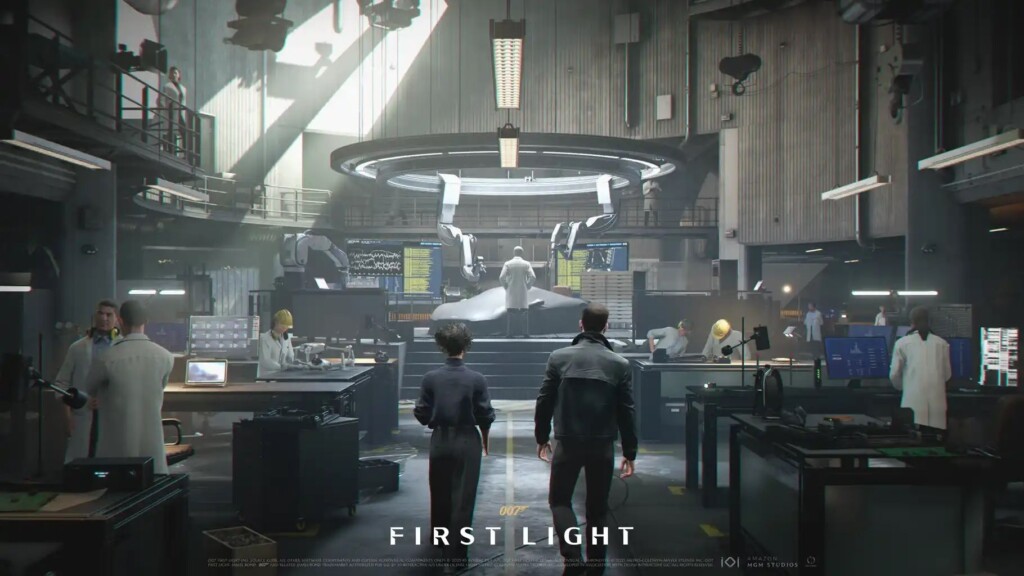
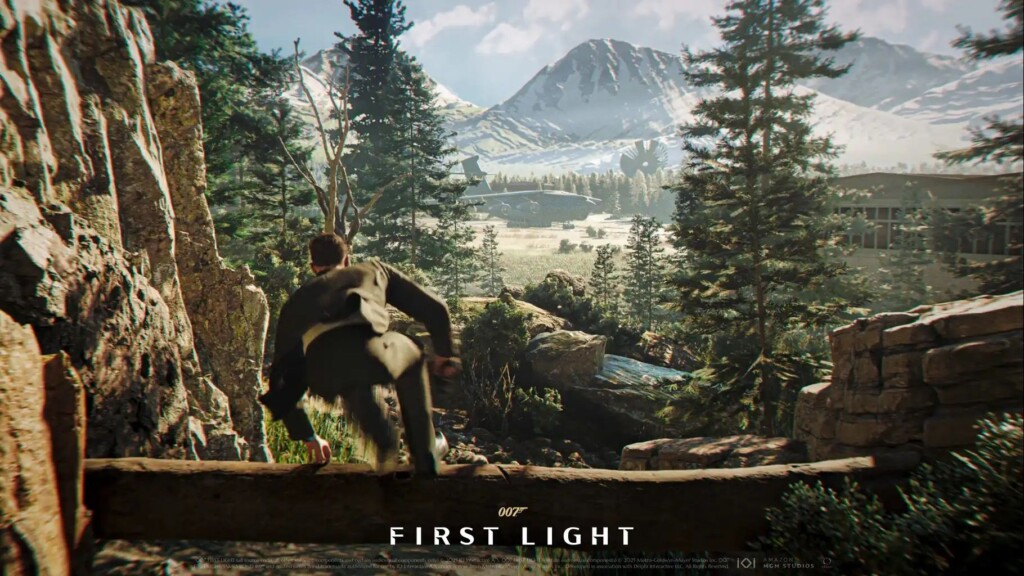
From there, the game quickly expands into a globe-spanning spy thriller. Whether climbing Icelandic cliffs, navigating a dusty training facility in Malta, or slipping into the neon-lit nightlife of London, 007 First Light consistently leans into its cinematic identity. Each location is rendered with striking visual care, and the orchestral score amplifies the sense of stepping directly into a high-budget Bond film.
Much like IO Interactive’s Hitman World of Assassination trilogy, missions unfold in large, semi-open environments that encourage experimentation. These spaces often feel like elaborate playgrounds rather than rigid corridors, allowing players to approach objectives through infiltration, disguise, or improvisation. Scaling marked structures to find alternate entry points or talking past security with careful deception becomes part of a flexible, systems-driven rhythm.
That freedom, however, is not absolute. At times, the game nudges players down specific paths or highlights objectives too explicitly through Bond’s Q-Lens system, reducing moments of discovery into straightforward waypoint following. In certain sequences, companion characters even accelerate progression if the player lingers too long, subtly breaking the illusion of organic exploration.
Still, the narrative itself remains engaging, even if its trajectory is occasionally easy to predict. The supporting cast is well-realized, and Patrick Gibson’s portrayal of Bond brings a confident, grounded energy to the role. The journey occasionally suffers from uneven pacing, with extended chapters that feel like natural endpoints only for the story to continue pushing forward, but its roughly 15–20 hour campaign maintains enough momentum to stay compelling. Additional modes like TacSim extend replay value beyond the main story.
Q Branch
A defining highlight of 007 First Light is its gadget-driven design philosophy, anchored by the ever-reliable Q. His presence feels thoughtfully integrated, framing Bond’s arsenal as an extension of ingenuity rather than brute force. From explosive pens to laser-equipped watches, the tools on offer evoke the playful imagination of classic spy fantasy while remaining mechanically functional in gameplay.
These gadgets are not merely combat tools—they are essential to progression, puzzle-solving, and environmental interaction. The game reinforces a methodical approach to stealth and engagement, where improvisation and spatial awareness matter as much as firepower. Bond is also required to select loadouts before missions, adding a layer of tactical preparation that reinforces the identity of each operation.
Central to this system is the Q-Watch, a multipurpose device used for hacking, interaction, and gadget control. It also introduces a resource system tied to power and chemicals, both of which are replenished through exploration. While occasionally stretching plausibility—such as charging it from arbitrary power sources—the system effectively ties Bond’s toolkit together.
Using these tools creatively remains one of the game’s strongest aspects, allowing players to bypass obstacles, manipulate environments, or dismantle threats without relying solely on direct confrontation.
Throwing Hands
Combat, however, is where 007 First Light becomes far more divisive. Designed to reflect Bond’s scrappy, improvisational fighting style, encounters remove traditional lock-on systems in favor of a free-floating camera and more chaotic melee flow. The intent is clear: clashes should feel messy, physical, and reactive.
In practice, this design choice is inconsistent. Group encounters can feel disorienting due to the lack of targeting precision, and the control scheme does not always align naturally with the intensity of combat. Even simple actions like parrying or dodging can feel unintuitive depending on input mapping, occasionally leading to frustrating deaths in otherwise manageable fights.
Bond himself is also notably fragile, which heightens tension but sometimes tips into frustration when combined with the loose camera behavior. When everything aligns, however, combat becomes fluid and satisfying, especially when chaining melee strikes with environmental interactions.
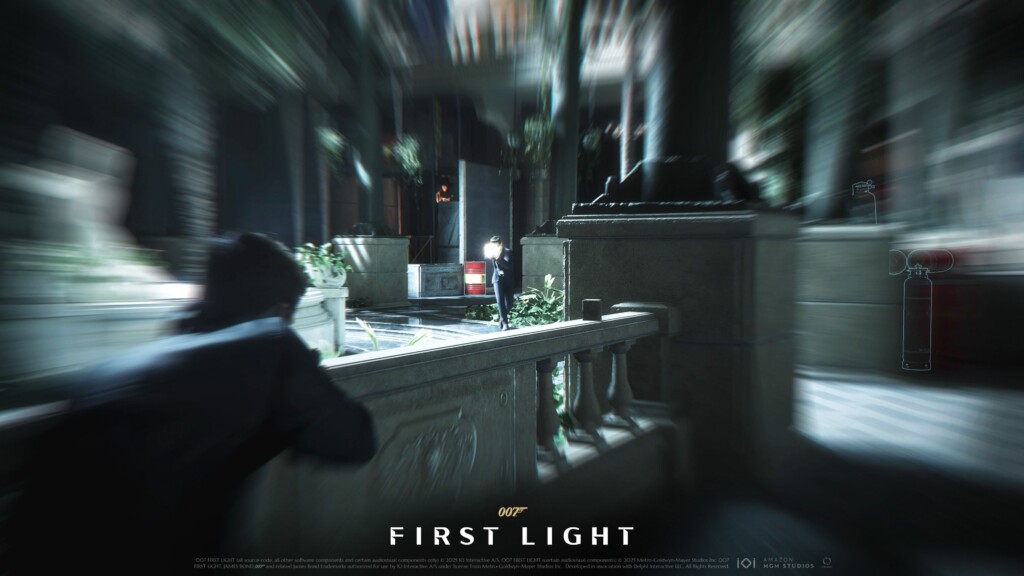
Gunplay, by contrast, delivers some of the game’s most consistently enjoyable moments. Ammunition management matters, particularly on higher difficulties, and firefights encourage improvisation—swapping weapons mid-combat, using thrown guns as improvised tools, and rapidly transitioning between targets creates a dynamic, cinematic rhythm that feels authentically Bond-like.
The result is a combat system defined by extremes: occasionally exhilarating, occasionally unwieldy, and heavily dependent on situational clarity.
Cool Under Pressure
Large-scale encounters showcase the technical ambition of 007 First Light. Explosions, collapsing environments, and dense firefights unfold with impressive stability, supported by IO Interactive’s Glacier Engine. Performance varies depending on hardware, but modern upscaling technologies help maintain smooth frame rates even in visually intense moments.
On high-end systems, the game delivers strong performance at demanding resolutions, with dynamic frame generation significantly boosting responsiveness in crowded scenes. Future updates, including path tracing enhancements, are expected to further elevate visual fidelity.

Artistically, the game is often stunning. Icelandic tundras and MI6 interiors are particularly striking, showcasing strong environmental design and atmosphere. However, visual inconsistency occasionally breaks immersion, with certain lighting conditions appearing flat or overly sterile. Small technical oversights—such as missing reflections in specific mirrors—momentarily disrupt an otherwise convincing presentation.
Conclusion
Ultimately, 007 First Light stands as a conflicted but memorable entry in the Bond legacy. It is arguably the strongest Bond adaptation since GoldenEye 007, even if that comparison reflects more on the franchise’s long dormancy than recent competition.
Its strengths lie in atmosphere, structure, and creative freedom within its mission spaces. Its weaknesses stem from uneven combat design and occasional over-guidance that limits player exploration. Yet beneath those inconsistencies lies a clearly ambitious foundation—one that successfully reintroduces James Bond in a modern interactive form.
For fans of the franchise, it is an easy recommendation despite its imperfections. IO Interactive has built a faithful, stylish interpretation of Bond’s world, and while it is not fully refined, it establishes a strong base for what could become a defining series moving forward.