The latest addition to Diablo Immortal is preparing to descend into the war against Hell’s legions—only this time, it answers fire with fire. Arriving on June 17, 2026, the Warlock becomes the game’s 10th playable class, blending summoner mechanics with destructive spellcasting. After going hands-on with the early update, it’s immediately clear this class carves out a distinct identity unlike anything currently in the roster.
A True Summoner Class
While most classes in Diablo Immortal dabble in pets, traps, or temporary allies, the Necromancer has long stood as the closest thing to a dedicated summoner. That works well if you enjoy the classic undead toolkit of skeletons and golems—but the Warlock pushes the idea into far more grotesque territory.
This is where true summoning obsession begins.
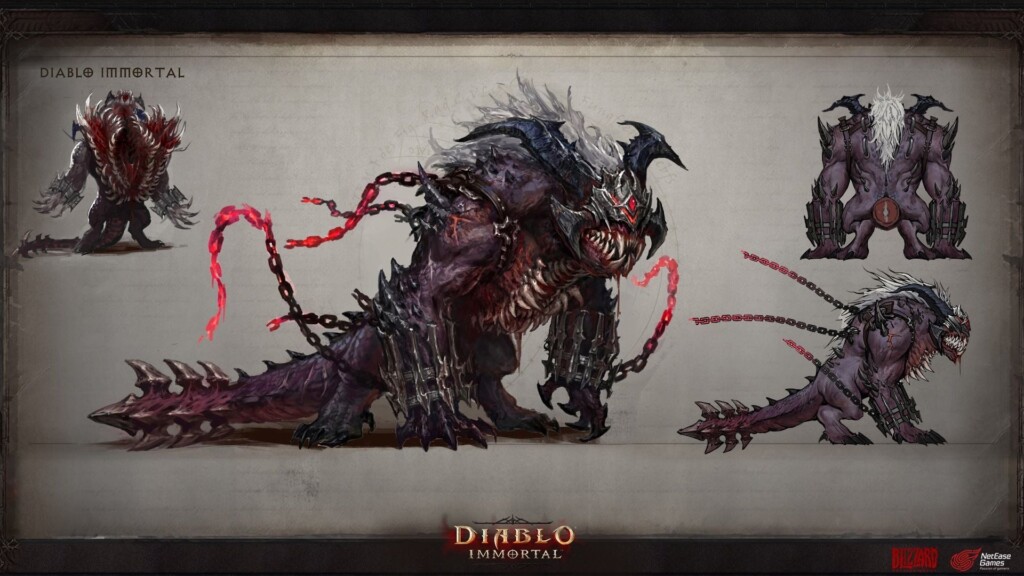
Right from level one, players gain access to the Soulgorger, a nightmarish companion that feels less like a pet and more like a living catastrophe stitched together from hunger and teeth. It doesn’t occupy a skill slot, yet it’s always present—lurking, striking, and reacting to everything on screen. It performs regular attacks, unleashes a heavy slam, and even siphons its own vitality to heal you when you’re close to death.
Its evolution only deepens the bond. As other summoned demons fall, the Soulgorger grows stronger by consuming them. By level 15, it unlocks Warp Strike, allowing it to blink across the battlefield, knock enemies into the air, and surge with increased attack speed. It may not be a raw damage engine, but its presence feels like dragging a personal mini-boss into every encounter.
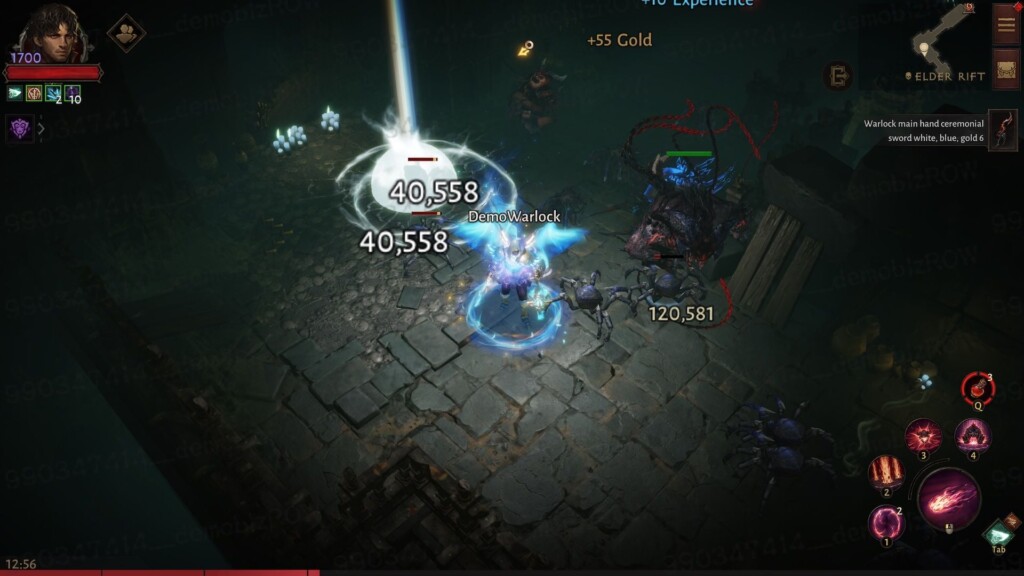
Beyond this constant companion, the Warlock’s toolkit is filled with fleeting, disposable horrors. Demonic Portal stands out as a flexible summon hub, offering three branching outcomes: a charging Bloodlord, a trio of short-lived Warriors, or a Rasplet Hulk that stuns and bleeds enemies in close range. Demonic Pact, meanwhile, calls forth a Twisted Shaman that rains hellfire bolts in response to nearby allies.
Other abilities expand the roster of temporary infernal allies even further. Lunatic Rush summons a Fallen Lunatic that detonates on impact, Hellswarm spreads damage-over-time effects while spawning Plagued Thornstriders from fallen enemies, and Burning Ascent conjures a Hellflyer that exhales fire as it carries the player across the battlefield.
A final layer of control comes from buffs that manipulate the summoned army. Lash of Pain drives demons into a frenzy after striking them, Siphon Life redistributes health between the player and the Soulgorger, and Blood Offering sacrifices demonic vitality to unleash area damage and bleeding effects.
The result is a playstyle that constantly shifts between commanding, empowering, and sacrificing an ever-changing swarm of infernal allies. The Soulgorger, in particular, feels like a centerpiece companion—less a minion and more a coiled disaster waiting to be unleashed.
Bring Forth the Hellfire
While summons dominate the spotlight, the Warlock’s direct magic is far from secondary. At level 34, Hellfire Bolt enters the arsenal, later transforming into a meteor-like barrage during its ultimate form. Spiteful Sacrifice further amplifies basic attacks, opening rifts that unleash shadow bursts with every strike.
Infernal Eruption turns the battlefield into a chaotic storm of fire geysers, excelling at clearing dense enemy groups, especially when paired with Devouring Darkness, which pulls enemies inward like a collapsing void. Tyrant’s Grasp, while less efficient in practice, delivers pure spectacle—manifesting a colossal hand that crushes anything it captures. For mobility, Brimstone Gateway creates linked portals that allies can pass through while active, offering both escape and repositioning utility.
The intent is clear: magic serves as a supporting force, enhancing and amplifying the summoning core. Still, the system leaves room for experimental builds that lean heavily into pure spellcasting.
Embrace the Warlock
Alongside the new class, Diablo Immortal will introduce a suite of supporting content: an origin quest, a Fractured Plane mode update, speedrun events, and preset Warlock Trial Dungeons. Players can either create a fresh character or convert existing ones through a class change system without losing progression.
The Fractured Plane offers roguelike-style trials with randomized legendary essences, while speedrun content reimagines familiar dungeons into time-attack challenges focused on efficiency and execution.
The Warlock’s origin story, “Power’s Price,” serves as a brief introduction—roughly a 10-minute scenario that locks gear and abilities while offering a glimpse into how the Warlock bound creatures like the Soulgorger. It’s light on narrative depth, but adds just enough flavor to ground the class in-world.
Over 50 new legendary items will further expand customization. The Mordscrape main-hand weapon, for instance, modifies Demonic Portal to summon a Hellflyer that generates a moving damage vortex. Shornhollow enhances Demonic Pact by boosting summon damage and movement speed at the cost of the caster’s own life force. The potential for creative builds is already apparent, with theorycrafting likely to explode quickly once the update goes live.
Still, the Warlock remains bound by the structural limits of Diablo Immortal. Despite its thematic richness, gameplay depth does not fully reach the layered complexity of titles like Diablo III or Diablo IV. Combat largely revolves around cooldown management and raw damage output, without deeper resource systems or layered debuff interactions.
Even so, for current players—or those who stepped away due to a lack of appealing class options—the Warlock may be enough to warrant a return. Its identity feels fresh, its summons feel theatrical, and the accompanying event structure offers plenty of incentives to dive back in when the Bloodied Jewel 5.0 update launches on June 17, 2026.