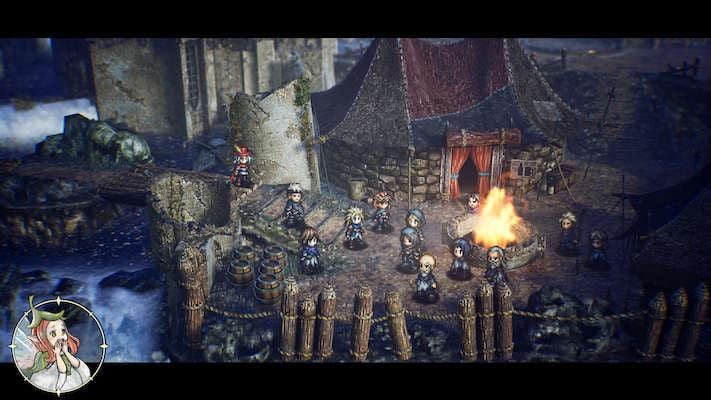
The HD-2D renaissance has already proven itself remarkably fertile ground, with Octopath Traveler helping set the tone for modern reinterpretations like Dragon Quest III HD-2D Remake and Live A Live, alongside original projects such as Triangle Strategy. With The Adventures of Elliot: The Millennium Tales, Square Enix returns to original IP—but this time, it pivots the formula toward real-time action. Where HD-2D has largely been synonymous with turn-based structure, Elliot demonstrates just how flexible the style can be, pairing its striking visual identity with kinetic combat and a time-spanning narrative that holds attention through to the end.
At the center of it all is Elliot himself—less a silent wanderer and more a sharply voiced adventurer who feels like a version of Link from The Legend of Zelda rewritten with expressive charm instead of silence. Elliot is defined by warmth and curiosity, the kind of protagonist who can slip naturally into conversation with anyone he meets. He carries himself with empathy and openness, traits that make him instantly likable rather than merely serviceable. Much of that appeal lands thanks to a strong vocal performance by Phillip Reich, whose delivery gives Elliot an easygoing, grounded presence throughout the journey.
His companion, Faie, brings a different kind of energy to the pairing. She is talkative, playful, and occasionally verges on the classic “guiding fairy” archetype, yet she avoids becoming grating in the way similar companions sometimes do. Instead, her childlike wonder adds texture to the journey—she celebrates discoveries with enthusiasm, reacts sincerely to danger, and slips in humor at just the right moments. Together, Elliot and Faie form a duo that gradually grows on the player, their dynamic becoming one of the game’s quiet strengths rather than a narrative obligation.
That said, the voice work isn’t without occasional friction. At times, dialogue triggers in ways that feel slightly out of sync with context. One moment stands out in particular: after backtracking through a cleared cave, Faie cheerfully wonders where the path might lead—despite the pair having already explored and fought their way through it. The moment is minor, but it briefly breaks immersion in an otherwise carefully constructed flow.
Combat, by contrast, rarely misses a beat. Elliot’s system allows him to equip two weapons simultaneously, encouraging fluid swapping and creative combinations in real-time encounters. A sword and boomerang pairing often proved effective, though bombs, arrows, a scythe chain, and a hammer each contribute situational utility. Faie complements this with elemental and traversal magic, from fire-based attacks to warp abilities that reposition Elliot in combat.
These tools extend beyond combat encounters into environmental problem-solving as well. Weapons and spells are woven directly into exploration puzzles, ensuring that nothing in the arsenal feels redundant or forgotten. The result is a design philosophy that consistently encourages full engagement with the player’s toolkit, reinforcing variety rather than hoarding it.
To be clear, this is not a radical reinvention of the 2D action formula. Players familiar with The Legend of Zelda will recognize the DNA immediately. But rather than attempting to reinvent the genre, The Adventures of Elliot: The Millennium Tales refines and reinterprets it within the HD-2D aesthetic, leaning into familiarity while still feeling freshly assembled.
Enemies populate the world organically, engaging Elliot in seamless real-time combat the moment he enters their awareness. Battles unfold quickly and decisively, with defeated foes dropping resources that must be collected immediately or risk being lost. The system feels responsive and satisfying, balancing tension and reward in a way that keeps encounters consistently engaging rather than repetitive.
One particularly intriguing mechanic is the drop-rate system, which rewards consecutive enemy defeats by increasing loot quality and currency gains. It creates a satisfying rhythm of momentum-driven combat, though it also introduces tension: a single hit can reset the streak, often abruptly halting progress. While an item exists to soften this penalty, allowing an extra hit before reset, it ultimately delays rather than eliminates the frustration.
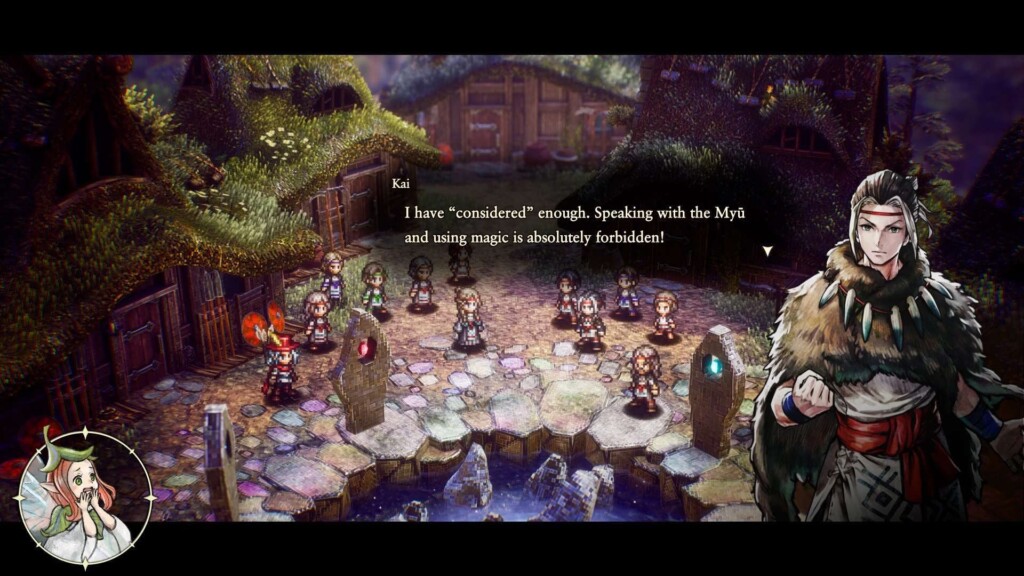
The world of Philabieldia itself plays into the game’s strongest ideas. Initially, it appears modest in scope—scattered ruins, caves, and lightly connected regions that don’t immediately suggest depth. But as the story unfolds, time travel reshapes how the map is experienced.
Shifting between eras transforms the same geography into something subtly new. The land remains familiar in structure, but enemy placement, environmental details, and traversal nuances shift across time periods. The effect recalls the dual-world structure of The Legend of Zelda A Link to the Past, though here the transitions are anchored in historical progression rather than parallel dimensions.
As the narrative deepens, additional temporal shifts further reshape Philabieldia, layering new variations onto familiar terrain. None of the changes are overwhelming on their own, but together they create a world that feels larger and more reactive than its initial presentation suggests. It’s a restrained but effective approach to environmental design, turning a relatively compact map into something that continually recontextualizes itself.
In the end, The Adventures of Elliot: The Millennium Tales succeeds not by reinventing familiar foundations, but by assembling them with precision and confidence. The HD-2D presentation fits seamlessly, the real-time combat carries genuine energy, and the time-shifting world design gives structure to exploration without overwhelming it. It may not break new ground in genre terms, but it understands exactly what makes those older adventures resonate—and builds something quietly compelling from that understanding.
And as the journey through Philabieldia winds down, one lingering question remains: has Elliot ever stopped long enough between timelines to try a cheesesteak?